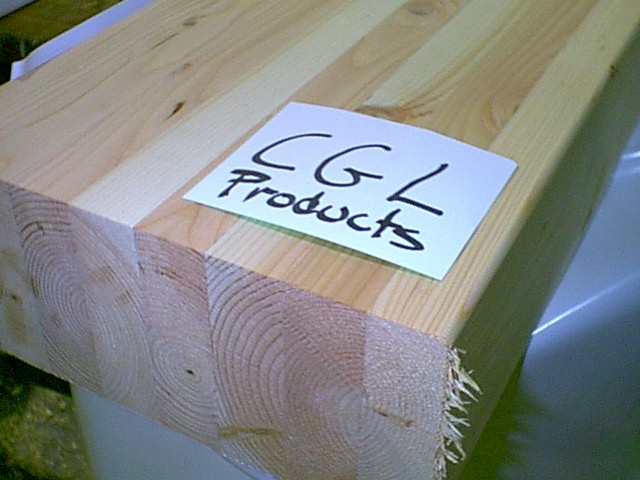
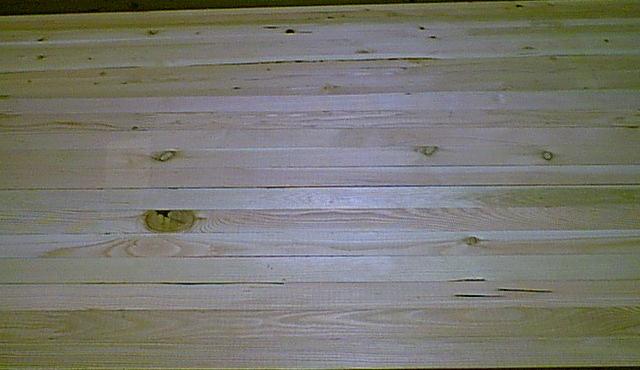
American Laminators is qualified to manufacture glulam members from Douglas Fir, Port Orford Cedar, Alaskan Yellow Cedar, and Southern Yellow Pine.
Douglas Fir
The vast majority of our production utilizes the Douglas Fir species. Standard widths are 3 1/8", 5 1/8", 6 3/4", 8 3/4" and 10 3/4". Standard depths are increments of 1 1/2" (4 1/2", 6", 7 1/2", etc...) Other widths and depths are available. American Laminators has manufactured beams as large as 14 1/4" x 73 1/2" x 134'-0". If your DF members require preservative pressure treatment, we recommend incising to increase preservative penetration.
Alaskan Cedar
American Laminators also offers members manufactured from Alaskan Cedar. Let the natural beauty of AC work for you. Since Alaskan Cedar has natural resistance to decay, pressure treatment is generally not required or recommended.
There are four standard appearance classifications for glulam members defined in APA Form No. Y110 and in ANSI A190.1. The classifications are as follows: Framing, Industrial, Architectural, and Premium. These classifications are summarized below and relate to a glulam beam's appearance only, not to its strength. Click on an image for greater detail or more information. Framing Appearance
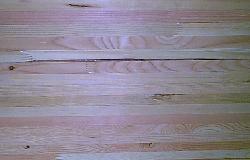
This classification is provided to match standard wall widths (Typically 3 1/2" and 5 1/2" widths). Glulam members will be planed in a "Hit & Miss" fashion. Low laminations, glue smear, end joint offsets and glueline squeeze out are permitted. Knot holes, splits and wane are also permitted and will not be filled.
Industrial Appearance
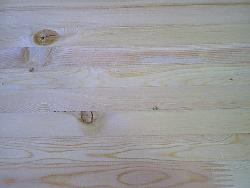
This classification should be used (specified) when appearance is not of primary concern. Loose knots and knot holes appearing on the wide face of the laminations (bottom of beam) exposed to view will be filled with putty, but voids appearing on the edges of laminations will not. Occasional misses, low laminations or wane are permitted.
Architectural Appearance
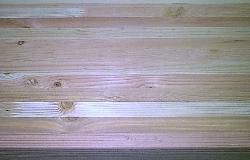
This is a high quality appearance suitable for applications where appearance is important but not an overriding consideration. All exposed knot holes and voids measuring over 3/4" will be filled with a wood-tone filler** (putty). Exposed surfaces will be smooth and the bottom edges will be eased (rounded).
Premium Appearance
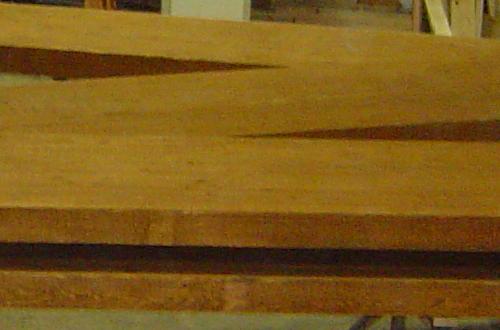
This is the highest standard glulam appearance classification. All exposed knot holes and voids will be filled with a wood-tone filler** (putty). Exposed surfaces will be smooth and the bottom corners will be eased.
** Note: If ordered, clear wood inserts will be used instead of wood-tone filler (putty).
Other Criteria
We have listed the standard appearance classifications above, however, if you want something different we will work with you. We can hand select lumber to reduce the size of knots and defects. We offer rough sawn finish and can apply wood stain (see below). Talk to one of our sales agents to discuss your requirements and the options available.
If you want your glulam members to have a special appearance, American Laminators can help. We can modify the surface texture providing a rough sawn appearance. If you don't like knots, voids, or putty, we can provide clear wood inserts. We can even stain your beams for you. Click on an image for a larger image. Rough Sawn
When glulam members are rough sawn, the resulting texture has more of a saw mill appearance. If the desire is to make the glulam look more like a solid sawn beam, American Laminators would definitely recommend the use of our clear glue. Our clear glue eliminates the dark lines between laminations. The Douglas Fir sample pictured here has also been stained.
Clear Wood Inserts
When a high quality appearance is required and patches of putty are unacceptable, clear wood inserts can be used to hide large knots or voids. Wood inserts will be carefully selected to match the color and grain of the area in question. When the operation is complete, the effect is visually appealing.
Wood Stain
American Laminators can stain your beams for you. A good stain can really bring out the beauty in your glulam members. We often use Olympic stains, but if you let us know what you are looking for, we will try to work with you.
Incising
Incising is offered to favorably increase the penetration of preservative treatment. Knives are used to puncture exposed glulam surfaces enabling the treatment to soak in deeper.
Clear glue is available to make the glue lines virtually invisible. Click on an image for greater detail or more information.
American Laminators offers glue laminated beams using clear adhesive. Our clear glue makes it almost impossible to detect the glue lines. The result is a beam similar in appearance to a solid sawn timber. There are no dark glue lines between the laminations.
Clear glue should be specified where appearance is important.
The glue is a special exterior treatable melamine adhesive. Besides being strong and attractive, this new adhesive is much more environmentally friendly, both in the manufacturing process and in service. There are no changes in the structural integrity of the products.
This product has been used in Europe for many years, but
American Laminators was the first company in the United States to use clear glue for nearly invisible lumber bonding.
The beam shown on the right was manufactured with brown glue. Frequently the dark brown glue lines are clearly visible
and detract from the overall natural beauty of a wood beam.
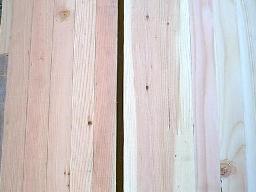
The photograph on the left shows a side by side comparison of beams made with brown and clear glues. (The beam on the left used brown glue.) Click on the photo for an enlarged view.